The problem
Modernizing a client portal means preserving who may see and change each record, not simply replacing the interface. LionLeaders brings the public website, MyPort collaboration, Academy training, Backoffice, and profile workflows into a shared application.
My contribution
I develop the Next.js/React web application, PostgreSQL-backed business logic, Android/Capacitor integration, and deployment workflows. matchme.best is the test environment for this project, not a separate real estate product. iOS belongs to the requested broader scope; a delivered iOS implementation is not established by the reviewed source.
The design
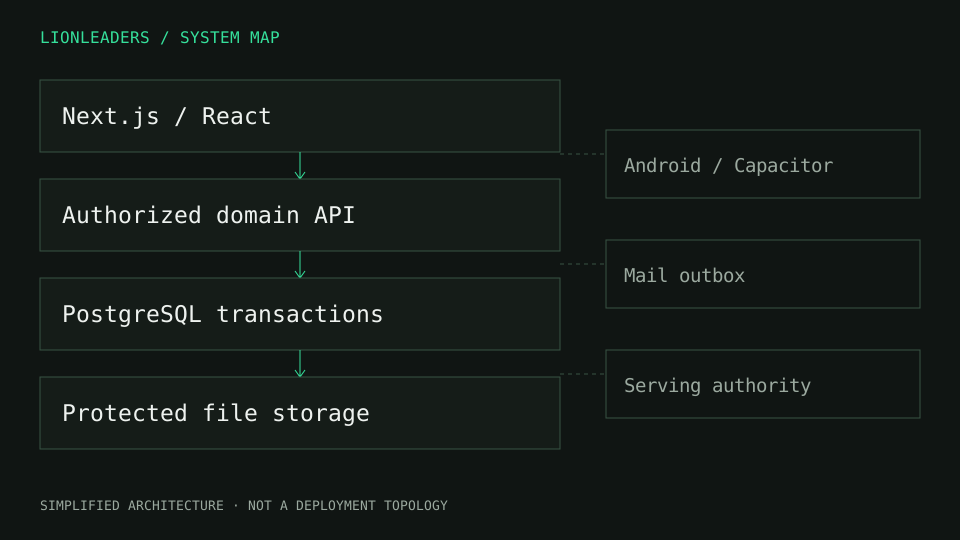
Authorized server handlers call shared domain services and PostgreSQL transactions. Protected files have explicit publication and checksum contracts. The Android client uses a constrained mobile API and native storage/lifecycle support. Notification outboxes and serving-authority checks handle operational boundaries.
A difficult problem: retrying the same intention
HouseHour, the fictional transaction sandbox, needed to distinguish a failed response from a failed mutation. The client retains its idempotency key through uncertain responses and refresh failures. The server binds replays to the actor, request content, and sandbox generation. Exact retries return the original result instead of creating a second action. HouseHour is a demonstration, not real-money settlement or property ownership.
Evidence and status
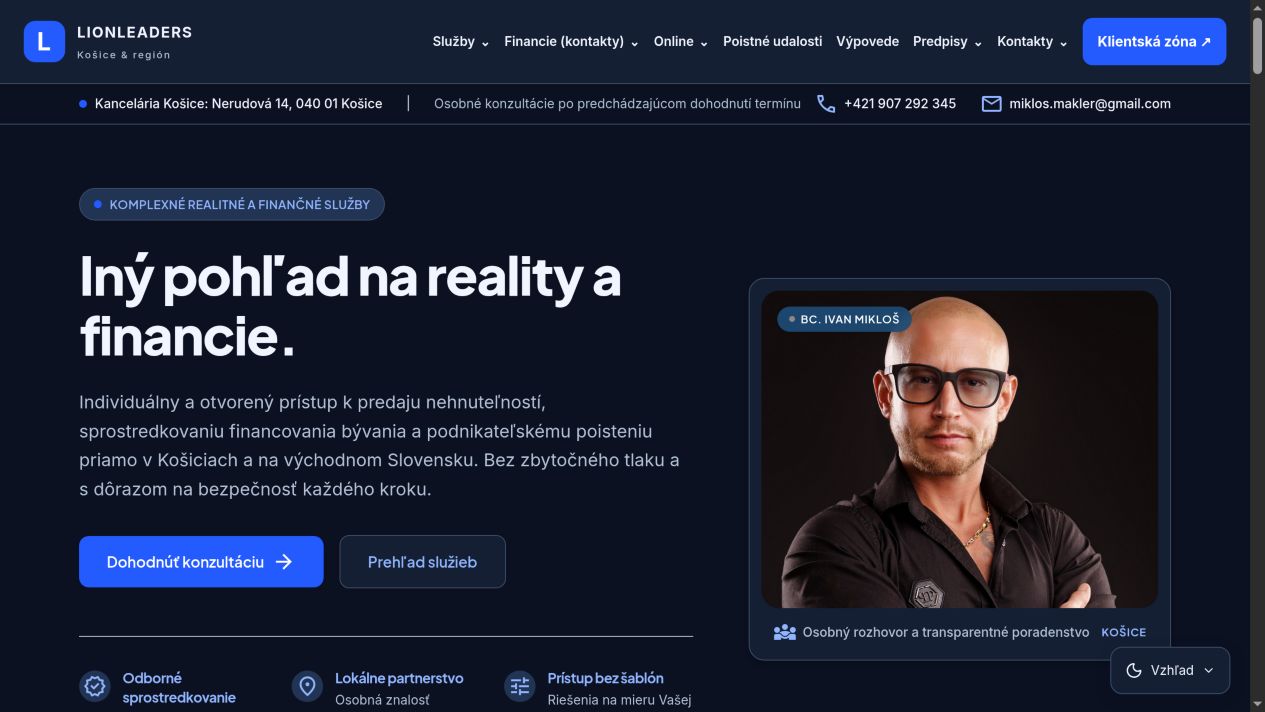
The project records document web and Android tests, authorization checks, interval-based training progress, immutable-file checks, and staged releases. Some combined mobile runs needed focused retests, and physical-device and migration acceptance remain separate. The public-site image shows the test presentation; it does not expose private customer records.