The problem
Everyday work spans mail, documents, communication, and several devices. Bringing them into one workspace creates a harder problem than shared navigation: background work must not block reading, credentials need clear ownership, and a reconnect must respect the user’s decisions.
My contribution
I develop the application and its integration workflows across Electron, React, TypeScript, platform helpers, and an Android companion. My work includes service boundaries, local persistence, device connection controls, testing, and release packaging.
The design
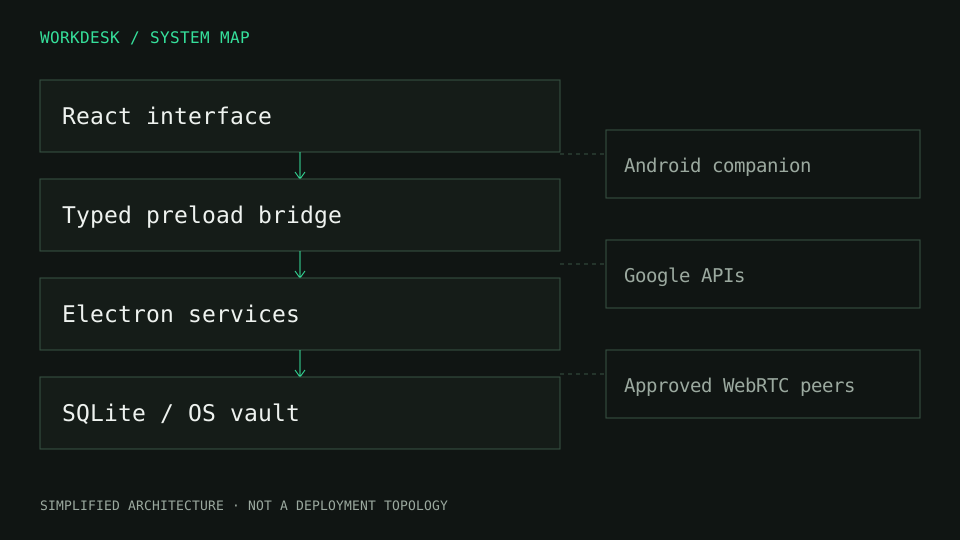
The desktop renderer calls a typed preload bridge. Main-process services own provider requests, credential access, and a Python-backed SQLite worker. Android implements its own native lifecycle and storage boundaries. Approved peers use WebRTC data transport; signaling, trust approval, and payload transfer have distinct roles.
A difficult problem: presence was not a connection
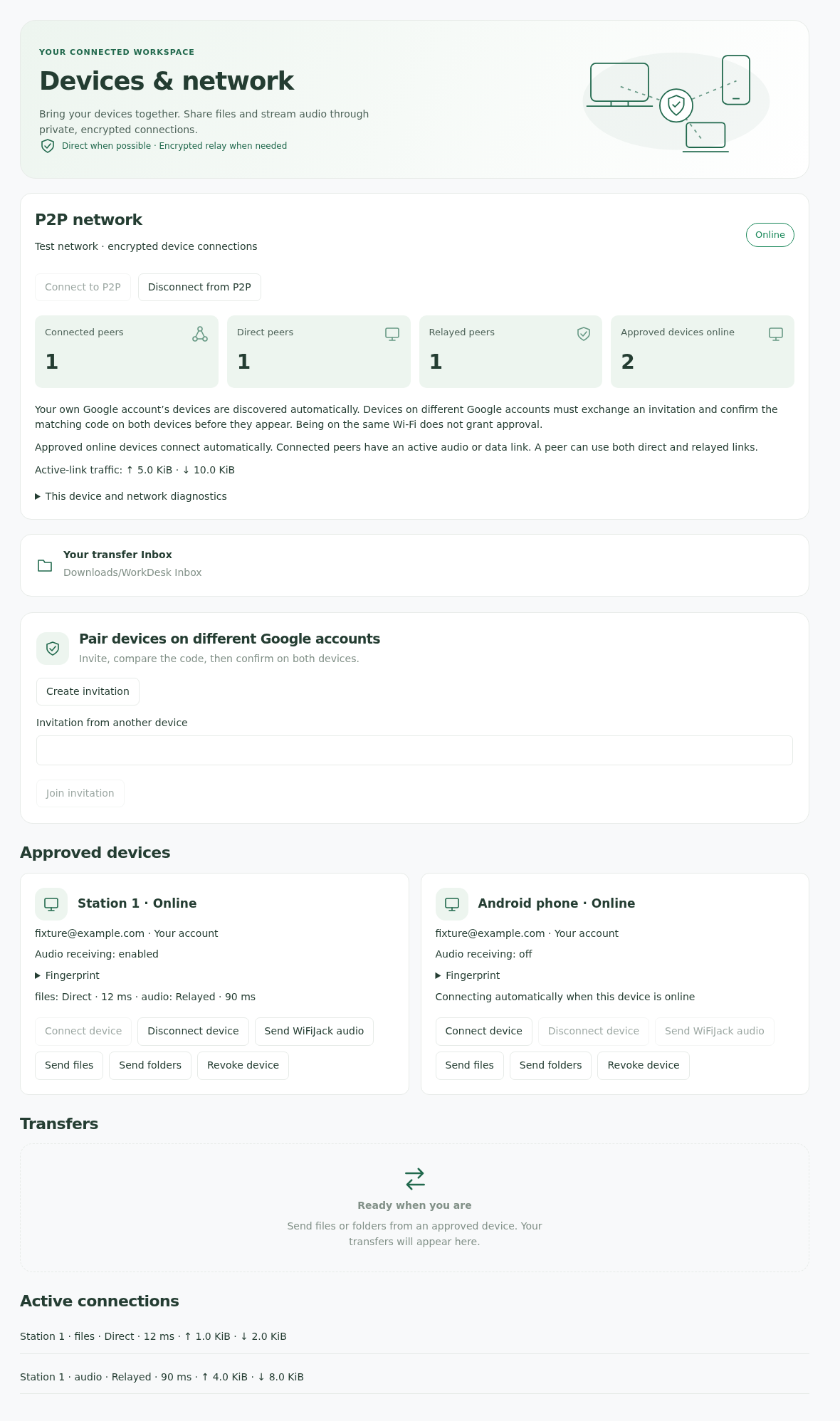
The peer preview could advertise a device without automatically opening its data link. The mesh controller now elects one initiator per approved pair, applies bounded backoff, and respects manual disconnect. Regression tests cover election and reconnect suppression. The illustrated fixture demonstrates the interface; its counts and timings are sample data, not performance measurements.
Evidence and status
The implementation and development records document cache-first mail, encrypted Gmail text chat, protected file workflows, peer controls, and signed-update verification. Test-channel features and production releases differ. Physical-device behavior, sustained network transitions, and audio recovery need their own acceptance checks.